Urad is an important pulse crop of India which is used as a whole and in the form of dal in various dishes across the entire population of India. Being rich in protein content, it is used as one of the main breakfast components in a variety of dishes and is mainly a staple.

| ENGLISH NAME | Black Gram |
| SCIENTIFIC NAME | Vigna Mungo |
| COMMON NAME(India) | Urad |
| REGIONAL NAMES | Hindi: Urad Dal Kannada: Urad Dal Marathi: Urad Dal Bengali: Urad Dal Punjabi: Urad Dal Tamil: Urad Paruppu Telugu: Urad pappu Malayalam: Urad Payar Gujarati: Udadani Dal |
| KASTURI PRODUCT NAMES | Urad Gola, Urad Dal |
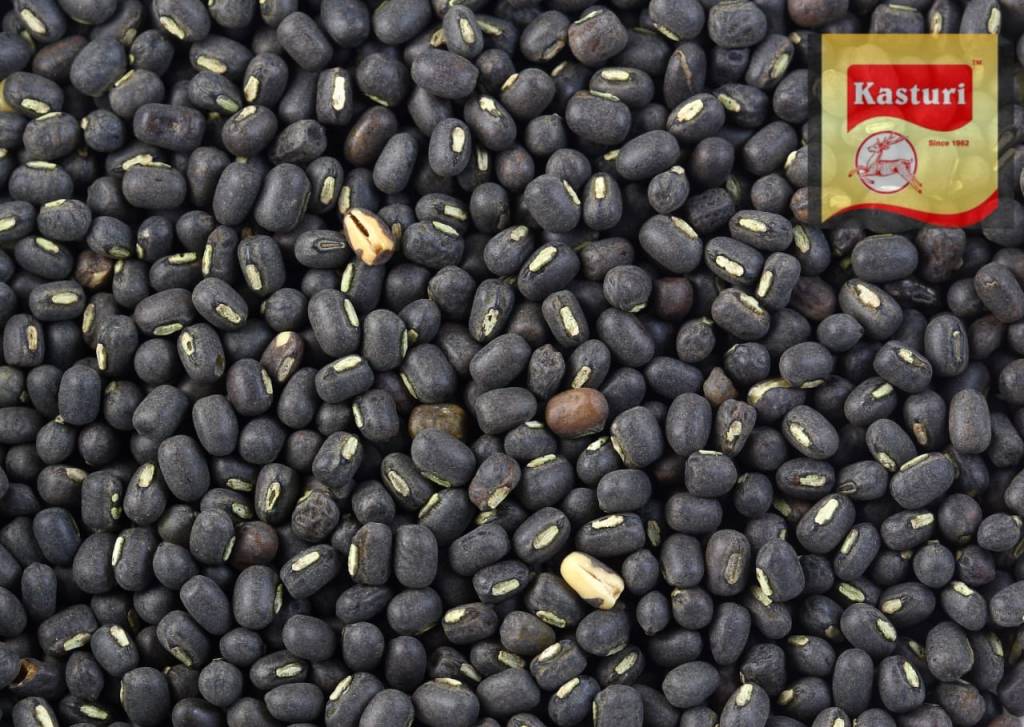
CROP:
The Urad crops in India are native to the states: Madhya Pradesh, Uttar Pradesh, Punjab, Maharashtra, West Bengal, Andhra Pradesh and Karnataka.
Sowing of seeds is generally done during the last week of June or first week of July.
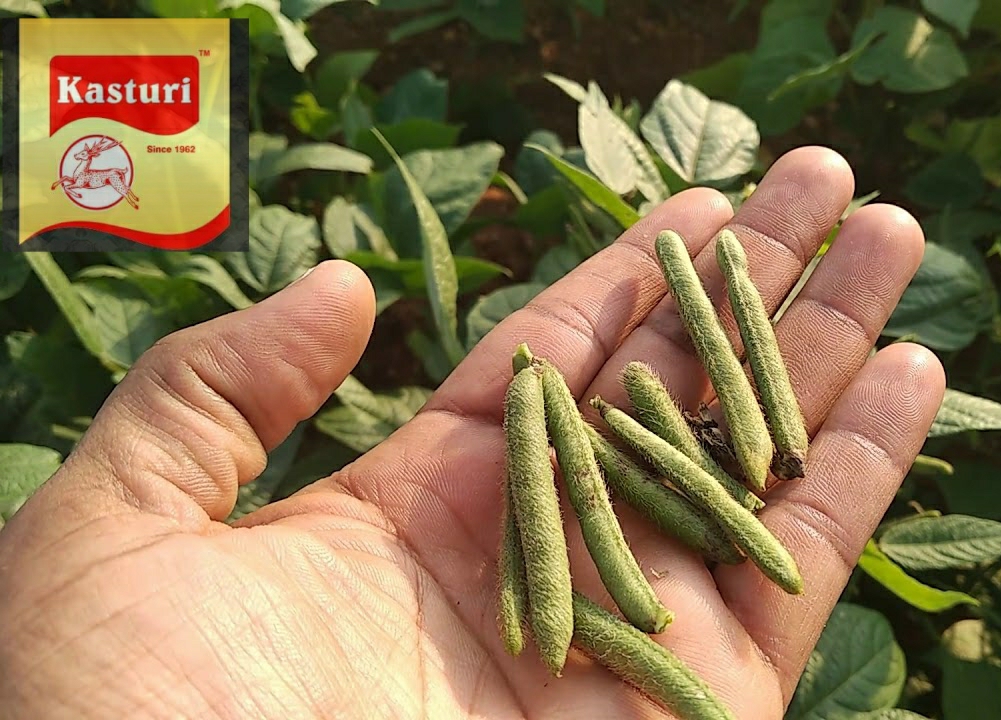
CROP REQUIREMENTS:
| TEMPERATURE | 15°C TO 30°C |
| RAINFALL | 50 TO 75cm |
| SOIL | Stiff and Heavy Soil |
FARMING POINTERS:
- The Urad Plants require stiff or heavy soil with a good water retention capacity for its growth. Saline- Alkaline Soil and water-logged soils are not suitable for its cultivation.
- The Soil is brought to a fine tilth by ploughing it about 2-3 times where-in the procedure of planking is carried out after each step of ploughing.
- The field is kept free after the process of ploughing for good aeration of the soil.
- Sowing of seeds is generally done in the last week of June and the first week of July.
- Sowing and spacing details:
- Row Spacing: 30cm
- Plant Spacing: 10cm
- Depth of Sowing: 4 to 6 cm
- Sowing Method: Seed Drill
- Irrigation is provided depending on the climatic conditions.
- The best time for harvesting is when the leaves shred and the pods become greyish black.
- The crop is cut with the sickle and the harvested crop is then spread on the floor to dry.
- Threshing is a technique that is then done to separate the seeds and the pods.
PROCESSING:
The processing of Urad is an extensive 5 day process which includes various steps to clean, peel and then make the consumable product out of it.
- Black Urad Bean is dried, cleaned and sent for spotting which is a technique that is carried out only if the beans are dry.
- After spotting, the bean is coated with a Mechanical Edible Oil and dried at 70°C to 80°C for 2 to 3 hours. It is then left overnight.
- Required amount of water is added to the seeds and they are allowed to soak up the water and bulge.
- The next day, the seeds are allowed to shrink so that their outer cover loosens.
- These are then passed into rollers to peel off its outer cover.
- The peeled seeds are then ground to split and make the Dal after which it is polished.
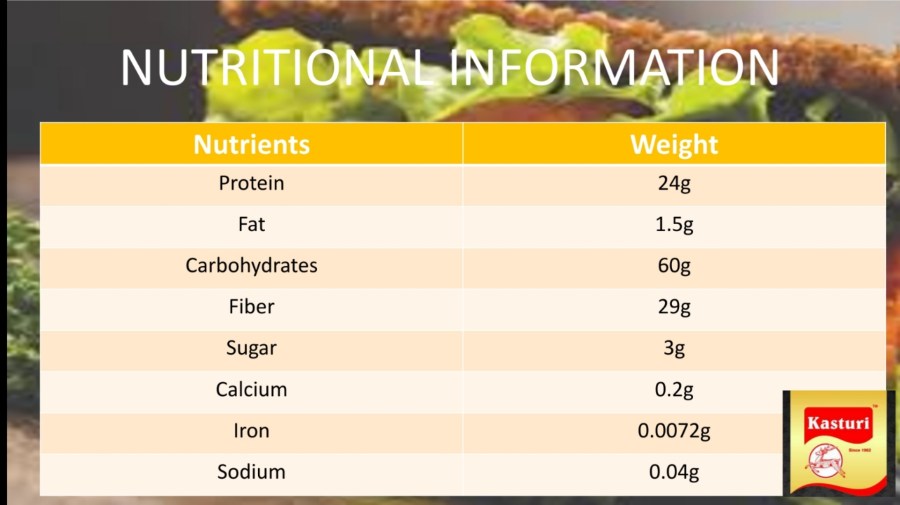
NUTRITIONAL FACTS:
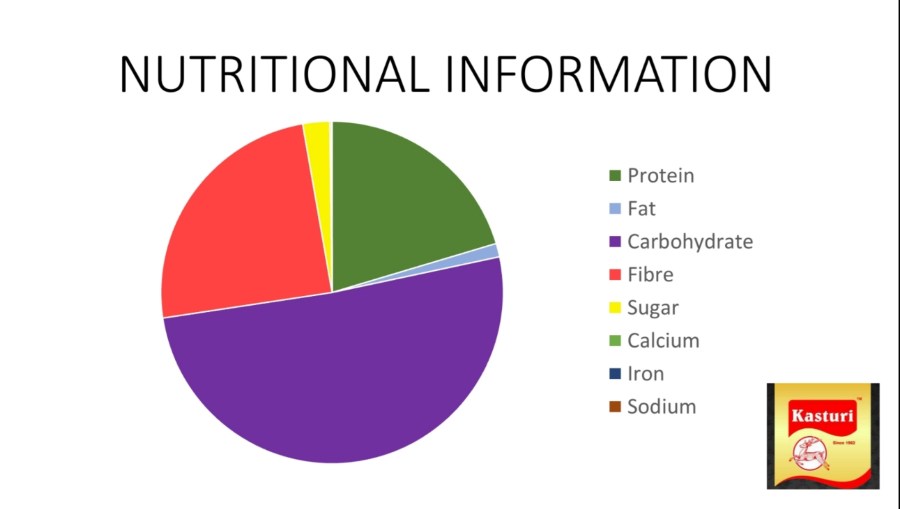
Urad Dal is a pulse which is a rich source of protein and Phosphoric Acid.
Per 100g, the Energy is 300KCal
HEALTH BENEFITS:
- Being a great source of protein, it mainly helps in replenishing worn out muscles and tissues and enhances bone health.
- It is a great source of energy.
- It aids in digestion and keeps the gut healthy.
- Very good for the heart.
- Helps in control of sugar levels and diabetes.
- Eases pain and inflammation
- It is very great for good skin.
DISHES:
Urad Dal being a staple, is used in every day diet in almost every household in India. There are a variety of dishes in which the Urad Dal is used like Idlis, Dosas, etc.
 KASTURI